Key points for selecting wires and cables
As the main carrier of power transmission, wires and cables are widely used in electrical equipment, lighting circuits, household appliances, and other fields. The quality of wires and cables directly affects the engineering quality and the safety of consumers’ lives and property. There are many types of wires in the market, and you need to choose the appropriate wire according to your own electricity load.
Some of the wires sold in the market are cheap and some are relatively expensive. Some people tend to get cheaper first, but cheap wires often have many properties that do not meet the requirements, which may bring many safety hazards to themselves. The production technology of wires is not too high, and there is not much difference in raw materials. If they are too cheap, it is either due to cutting corners or insufficient quantity. How to identify it. I will share with you several methods that are relatively easy to identify:
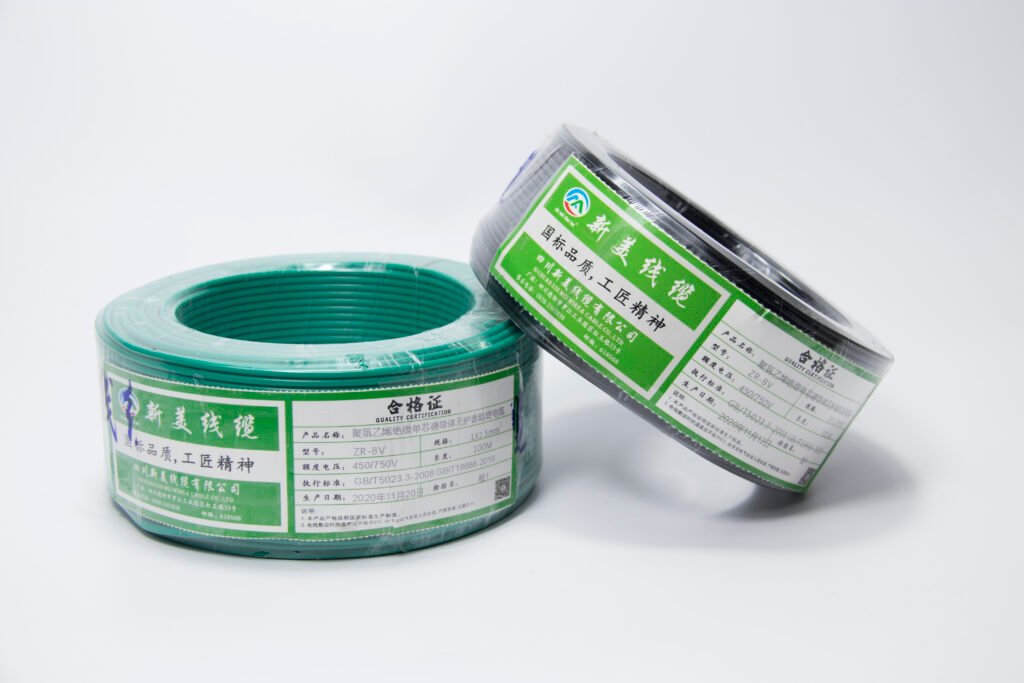
According to national regulations, wires must have certain markings, with a maximum of no more than 500mm, and the next identical marking will be printed on it, usually with the product’s trademark, manufacturer name, implementation standards, etc.
Look at the packaging. National standard wires are often well made, neat, and have a sense of quality when held in hand.
I need to open the package and take a look at the wires inside. The standard wire for 1.5-6 square meters requires a skin thickness (insulation thickness) of 0.7mm. If it is too thick, it is non-standard, and the corresponding core is definitely not enough. You can pull the wire skin hard, and the ones that are not easily torn are usually the standard ones
Fire it down and extinguish it within 5 seconds after leaving. It has a certain flame retardant function and meets the national standard.
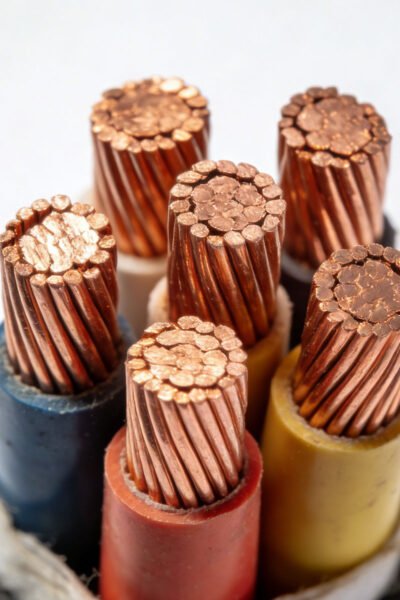
Looking at the inner core, the higher the brightness of the material (copper), the better the copper quality, and the brightness is uniform, glossy, and without any layering. The national standard requires that the inner core must be made of oxygen free copper. Non standard materials such as black rod copper may pose potential safety hazards.
The thickness of the inner core has certain requirements in the country, but not very strict. But there won’t be a lot of mistakes, just a small, usually imperceptible error.
Length, the country does not mandate the use of rice, but many manufacturers also use rice, which may not necessarily be in accordance with national standards. However, general national standards generally do not require the use of rice. Non standard rice milling is just a means.