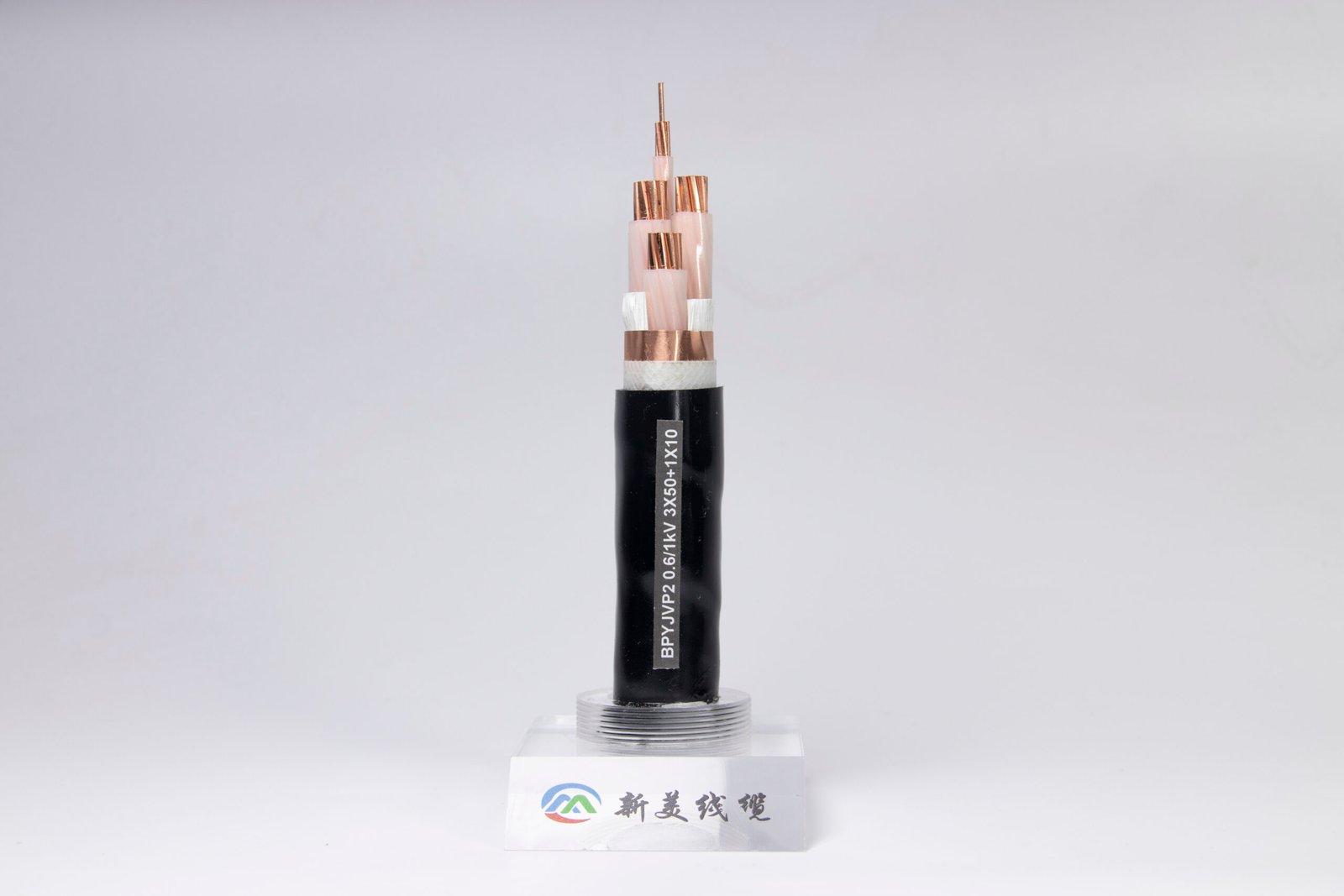
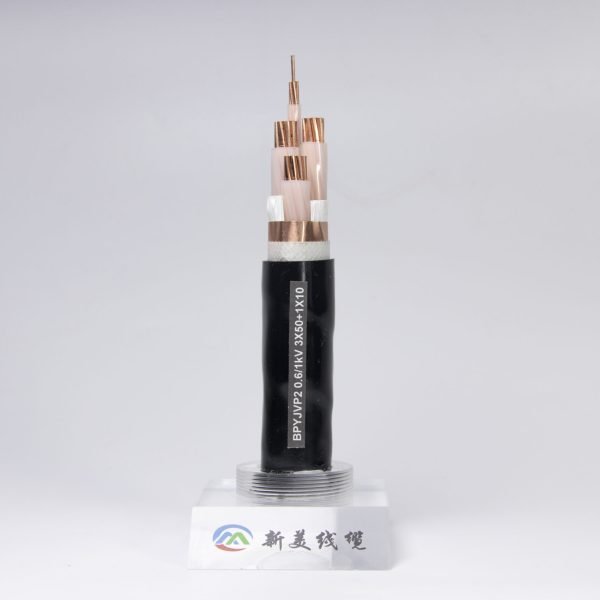
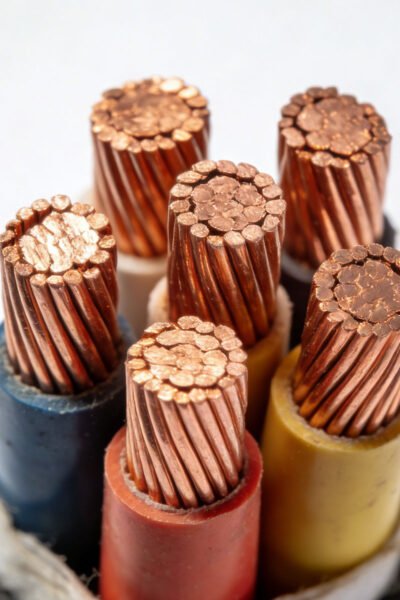
Variable frequency cables are designed to solve these problems, and they are precision products of materials science and structural design. Cross linked polyethylene (XLPE) insulation material provides a strong foundation for voltage and heat resistance, capable of withstanding the impact of high-frequency pulses. On this basis, its performance is ensured through two core structures:
Symmetric core wire structure: offsetting harmonic interference
The traditional four core (3+1) structure cannot effectively control harmonics. Variable frequency cables generally adopt a symmetrical structure of 3 cores (3G) or 3+3 cores, the latter of which divides the grounding/neutral wire into three, more accurately canceling out high-frequency harmonics and improving electromagnetic compatibility.
Multiple shielding structure: constructing electromagnetic protection net
The shielding layer is the key to variable frequency cables, mainly in the following ways, and its performance comparison is as follows:
Copper wire braided shielding: good flexibility, strong anti-interference ability, with a coverage rate of over 80%. Transfer impedance ≤ 80 m Ω/m (1MHz) is the mainstream choice.
Copper tape wrapped shielding: 100% coverage, high shielding efficiency. Transfer impedance ≤ 150 m Ω/m (1MHz), often used in combination with copper wire weaving.
Copper wire and copper tape combination shielding: Combining the advantages of both, the shielding effect is the best. Transfer impedance ≤ 30 m Ω/m (1MHz), suitable for strong interference environments.
Aluminum foil+drain line shielding: 100% coverage, high shielding efficiency, suitable for situations where low-frequency and high-frequency interference coexist.
In addition, as a mechanical supplement, the armor layer (such as galvanized steel wire) can resist external impact for cables in marine, mining and other scenarios.
Multiple shielding structure: constructing electromagnetic protection net
The shielding layer is the key to variable frequency cables, mainly in the following ways, and its performance comparison is as follows:
Copper wire braided shielding: good flexibility, strong anti-interference ability, with a coverage rate of over 80%. Transfer impedance ≤ 80 m Ω/m (1MHz) is the mainstream choice.
Copper tape wrapped shielding: 100% coverage, high shielding efficiency. Transfer impedance ≤ 150 m Ω/m (1MHz), often used in combination with copper wire weaving.
Copper wire and copper tape combination shielding: Combining the advantages of both, the shielding effect is the best. Transfer impedance ≤ 30 m Ω/m (1MHz), suitable for strong interference environments.
Aluminum foil+drain line shielding: 100% coverage, high shielding efficiency, suitable for situations where low-frequency and high-frequency interference coexist.
In addition, as a mechanical supplement, the armor layer (such as galvanized steel wire) can resist external impact for cables in marine, mining and other scenarios.